Deutsche Bahn Complete Guide: Train Types, Cheap Tickets, Monthly Pass & Delays
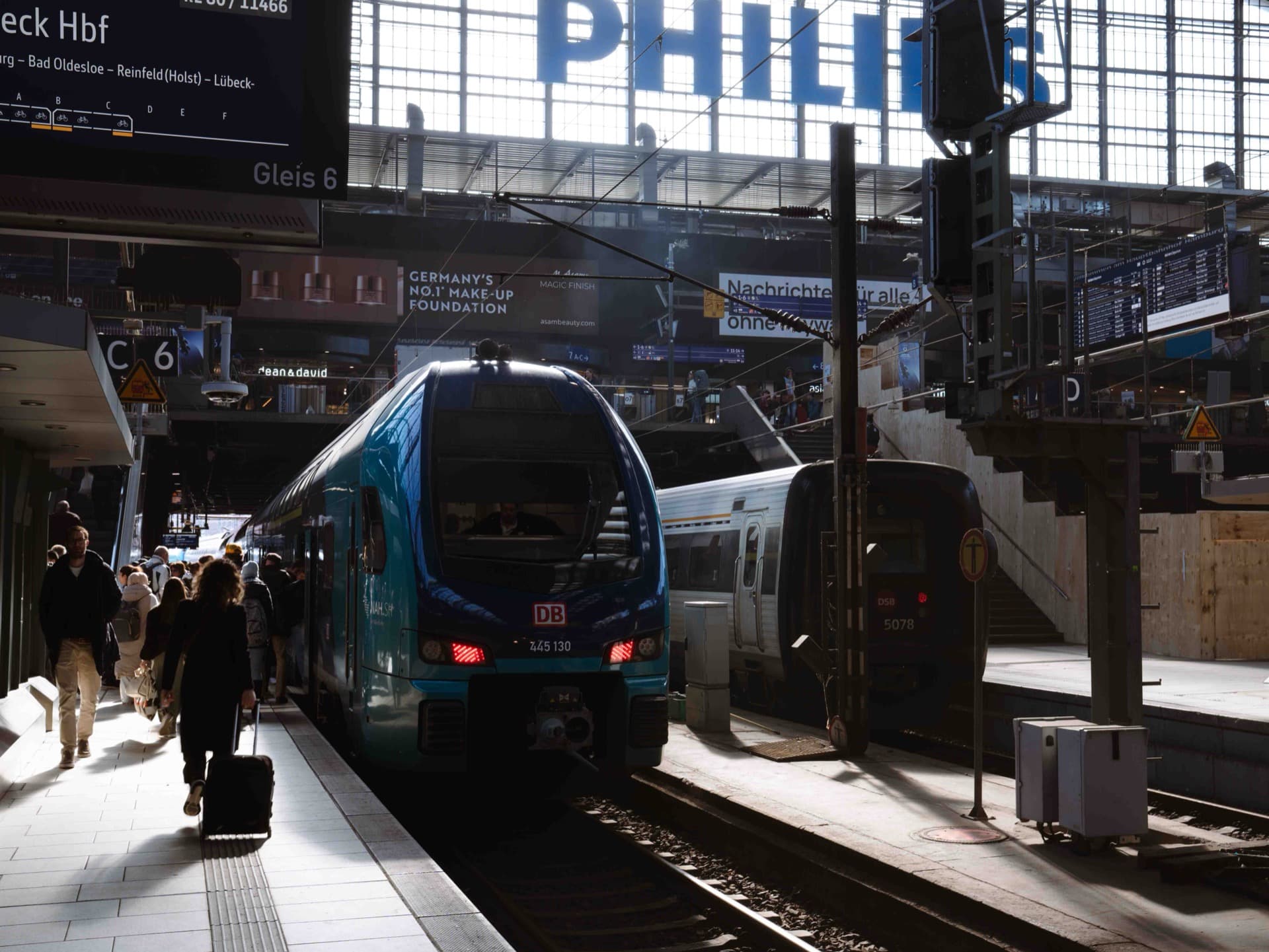
Deutsche Bahn (DB) is Germany's main rail network — dense coverage, nationwide reach, and unavoidable for exchange students making intercity trips. European trains run on random ticket inspection, not entry gates. Getting caught without a valid ticket means a heavy fine — don't risk it. The Deutschlandticket costs €63/month in 2026 — and many universities include it in the semester fee. Check before buying separately. ICE and IC trains have seat reservations — on busy routes without one, you may end up standing the whole way. Delays are normal. Build in buffer time for anything important.
Train Types: What Runs Where
DB trains are organized in tiers, each with different speeds, coverage, and ticket requirements:
| Type | Full Name | Notes |
| ICE | Intercity-Express | High-speed, most expensive, major city-to-city routes |
| IC / EC | Intercity / Eurocity | Fast intercity trains; EC crosses into neighboring countries |
| RE | RegionalExpress | Regional express, fewer stops — covered by Deutschlandticket |
| RB | RegionalBahn | Regional slow train, more stops — covered by Deutschlandticket |
| S-Bahn | Suburban rail | City-area commuter trains — covered by Deutschlandticket |
The rule: ICE / IC / EC require a paid long-distance ticket. RE / RB / S-Bahn are within the monthly pass range.
Ticket Inspection: Random Checks, Real Fines
German trains don't have entry gates — no tap-in, no turnstile. But this doesn't mean you can ride without a ticket. Conductors move through carriages and check tickets at random. Getting caught without a valid ticket means paying the full fare plus a penalty fee on the spot.
Electronic tickets (including Deutschlandticket) are shown via the DB Navigator app. Conductors scan the barcode to verify.
Wi-Fi and Charging
Onboard facilities vary significantly by train type:
- ICE / IC: usually have free Wi-Fi (WIFIonICE from DB), but signal quality is inconsistent — it drops through tunnels, in rural areas, and under heavy use. Don't depend on it for important work
- RE / RB: most have no Wi-Fi, or run under third-party operators with varying setups — it depends on the route and the operator
- Charging: ICE seats usually have power outlets or USB ports; RE / RB carriages often don't, especially older ones
For long ICE journeys, download what you need before boarding and consider using your phone as a hotspot as backup.
How to Buy Tickets Cheaply
The Deutschlandticket doesn't cover ICE trains, so for intercity travel you'll need a separate ticket. When you buy matters enormously.
The Three Main Fare Types
| Ticket | Price | Refundable / Changeable? | Notes |
| Super Sparpreis | from ~€13.99 | No / No | Book 1–6 months ahead — cheapest option |
| Sparpreis | from ~€17.90 | No / No | Book ahead, reasonable pricing |
| Flexpreis | ~€150+ | Yes / Yes | Fully flexible, but much more expensive |
Book Super Sparpreis the moment plans are confirmed. A Frankfurt–Berlin Flexpreis ticket runs €150+, but the same trip booked two months ahead as Super Sparpreis can be as low as €13–20. That's a significant difference.
Practical Tips
- Sparpreis-Finder on bahn.de: searches across flexible dates to find the cheapest fares — useful when your exact travel date isn't fixed
- BahnCard 25 (under 27): ~€39.90/year, 25% off all tickets. Pays for itself after a couple of intercity trips
- DB Navigator app: search, purchase, and store tickets offline. Download your ticket after purchase — you'll need it when boarding
Group Travel: Regional Day Tickets
Traveling with others? Regional day passes are often cheaper than individual tickets:
- Bayern-Ticket: €27 (1 person) + €8 per additional person, up to 5 — unlimited RE/RB/S-Bahn across Bavaria for the day. Works great for Neuschwanstein or Königssee
- Quer-durchs-Land-Ticket: €42 + €8/person — nationwide RE/RB travel, good for cross-state trips
Note: on weekdays, both tickets are only valid from 9:00 AM. On weekends there's no restriction.
Deutschlandticket: The Monthly Pass
This is the most useful purchase of an exchange semester.
The Deutschlandticket costs €63/month in 2026 (it has been increasing year by year — check the current official rate when purchasing). It covers all regional public transport across Germany: RE, RB, S-Bahn, U-Bahn, trams, and local buses. If it's not an ICE, IC, or EC, you're covered.
With this pass, you don't need separate city transport tickets anywhere in Germany, and day trips to nearby cities cost nothing extra. The monthly savings typically exceed the ticket price.
Your University Might Already Include It
Many German universities include the Deutschlandticket in their Semesterticket (semester fee) at a subsidized rate through the Studentenwerk — often cheaper than subscribing directly.
Confirm with your university before buying separately, and ask when the ticket becomes available. Some schools don't distribute it until after the semester starts, which leaves a gap to plan around.
To buy independently: DB Navigator app or bahn.de. It auto-renews each month — cancel by the 10th of the current month to avoid being charged for the next.
Delays: Reality Check
Here's the honest number: roughly 35% of DB long-distance trains ran late in 2024.
Regional trains are more reliable — around 92–94% on time — but still not guaranteed.
The right mental model: treat the timetable as an estimate, not a promise. For anything with hard timing afterward — a flight, a transfer, a concert — build in at least one extra train's worth of buffer. Delays can cascade: one late train pushes the next, and so on.
The DB Navigator app shows real-time delay information on your journey page. Checking it before you leave is a good habit.
Delays Over 60 Minutes: Claim a Refund
German law (Fahrgastrechte) guarantees passenger rights:
| Delay | Refund |
| 60–119 minutes | 25% of ticket price |
| 120+ minutes | 50% of ticket price |
Claim via the DB Navigator app or at bahn.de/fahrgastrechte, up to 12 months after travel.
Practical tip: take a screenshot of the delay in the app before your journey ends. It makes submitting the claim much smoother.
Seat Reservations: Worth It on ICE and IC
Seating on ICE and IC trains is open / unassigned by default — your ticket gets you on the train, but not a specific seat. Each seat (on the headrest or on a small screen above) shows whether it's been reserved and for which stretch of the journey. An empty display means it's free the whole way.
To guarantee a specific seat, add a reservation at booking for around €4.90 extra.
During holidays, long weekends, or on popular routes, reserving is strongly recommended. A friend of mine boarded an ICE from Brussels without a reservation and found the train nearly full — they spent most of the journey standing or searching for gaps. On busy routes, carriages fill up fast, and standing for two or three hours isn't unusual.
Quick Reference
| Topic | Key Point |
| Ticket inspection | Random checks — no gates, but real fines for no ticket |
| Wi-Fi | ICE has it (unreliable); RE/RB usually don't |
| Cheap tickets | Book Super Sparpreis early — can be 85% cheaper than Flexpreis |
| Deutschlandticket | €63/month in 2026 — check if your Semesterticket already includes it |
| Delays | ~35% of long-distance trains ran late in 2024 — build in buffer time |
| Delay refunds | 60+ min → claim 25–50% back; screenshot the delay as proof |
| Seat reservations | ~€4.90 extra — worth it on busy ICE/IC routes |
Questions or feedback?
If anything in this article is incorrect or you have a question, feel free to leave a note.