Is Rostock Worth It for Exchange? City Life & University Guide
Rostock is a quiet Baltic port city in northern Germany — lower cost of living than Munich or Hamburg, and a slower pace that makes it easier to settle into as a first-time exchange student. Universität Rostock, founded in 1419, is one of the oldest universities in the German-speaking world — English-taught course options are limited and the academic workload is demanding, so come prepared. Student dormitories run around €300/month for a single room; total monthly expenses are realistically €900–1,100. Weekend trips to Berlin (2.5 hrs), Hamburg (1.5 hrs), or Stockholm (overnight ferry) are all within reach. In winter, during periods of strong solar activity, the aurora is visible from the city outskirts.
What Kind of City Is Rostock?
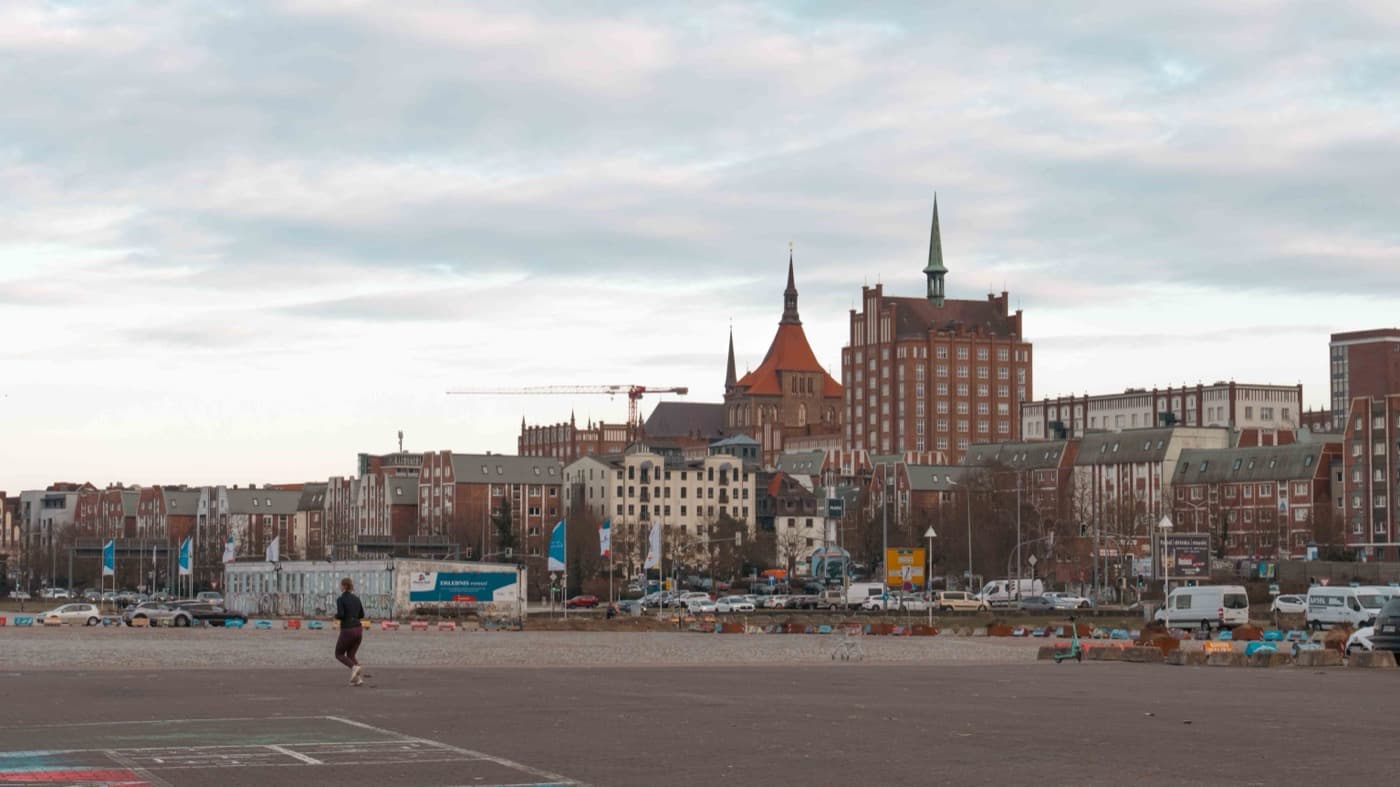
Rostock old town cityscape
Rostock sits on the Baltic Sea in Mecklenburg-Vorpommern, Germany's northernmost state — the largest city on the German Baltic coast, with around 200,000 residents. It rarely comes up first in conversations about German exchange destinations, which is partly what makes it worth considering: no overwhelming tourist density, a manageable pace, and a city that's straightforward to settle into.
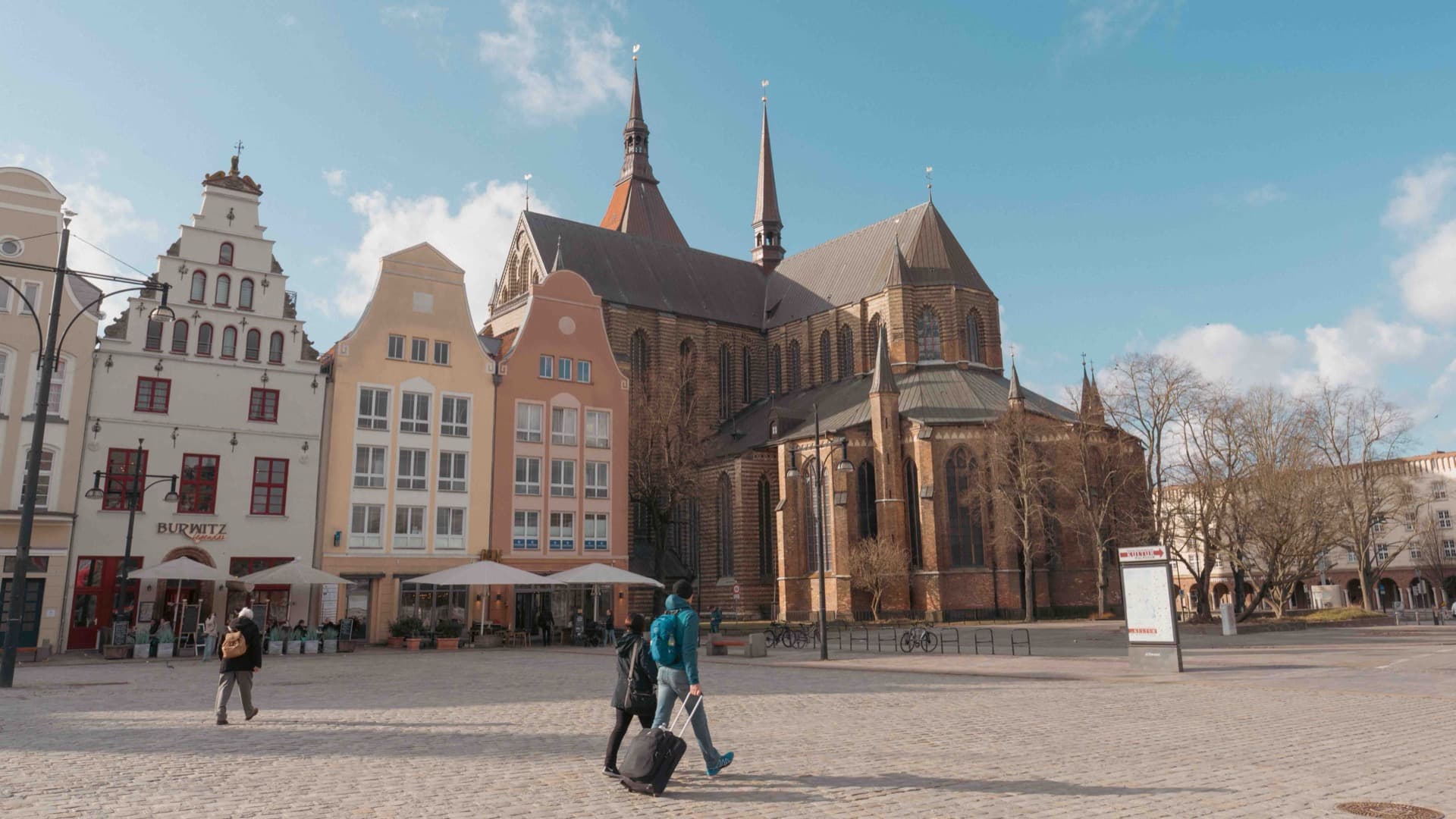
The city has deep Hanseatic League roots. The historic Neuer Markt square at its center is flanked by Gothic red-brick architecture — the ornate city hall, an early morning market, winding old town streets nearby. It's the most walkable part of the city and worth exploring.
A 20-minute S-Bahn ride brings you to Warnemünde, Rostock's seaside district: a white lighthouse, sandy beach, and the flat grey-blue Baltic. Busy in summer, quiet and atmospheric in winter.
Universität Rostock: Courses and Campus Life
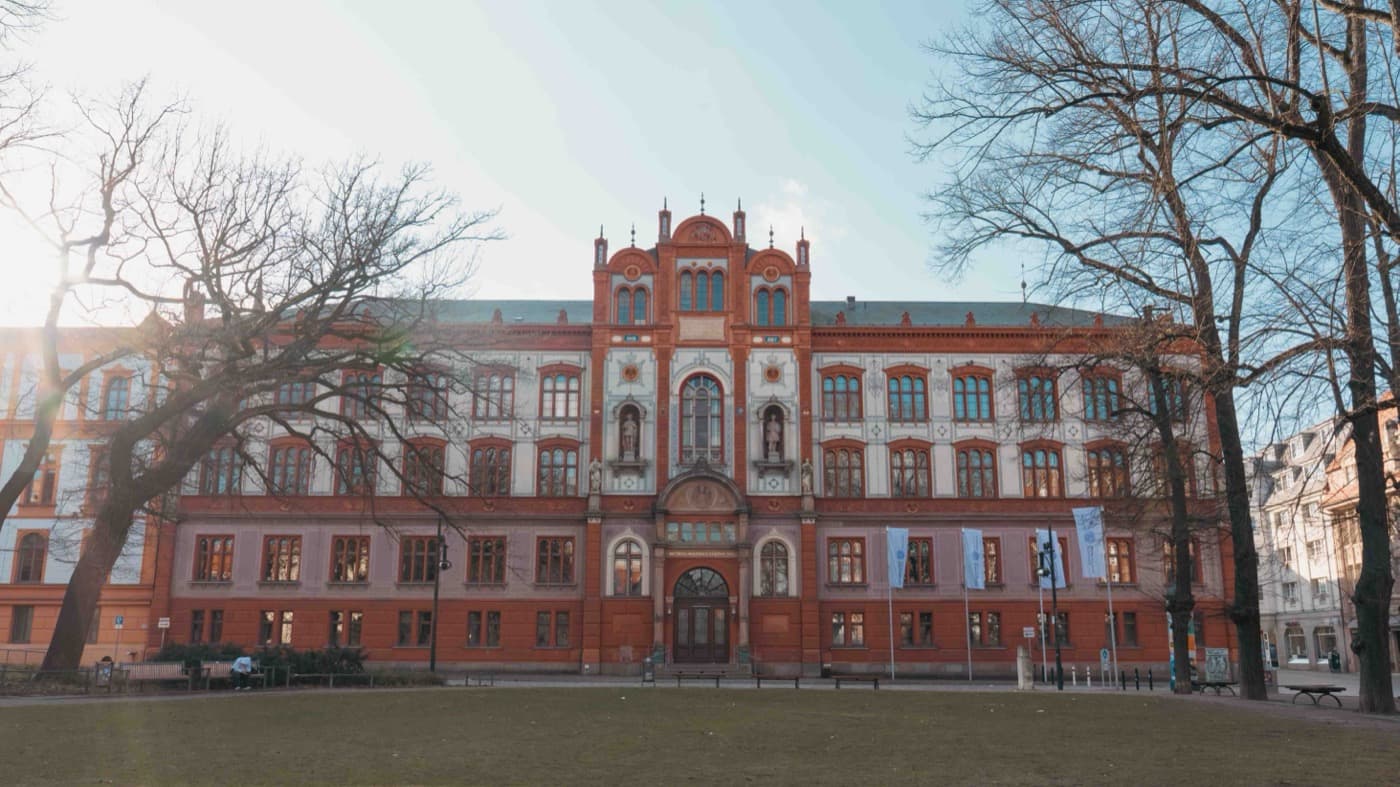
Universität Rostock building exterior
Universität Rostock was founded in 1419 — the first university on the Baltic Sea and one of the oldest in the German-speaking world. Around 15,000 students currently enrolled. No enclosed campus; faculties are distributed across city streets and woven into ordinary neighborhoods.
A note on English-taught courses: there are English options, but the selection is more limited than at larger international universities. German universities are academically demanding regardless — exams, papers, and attendance requirements are serious. Before arriving, check the LSF course system to filter by language, and contact the International Office to confirm which courses are suitable for exchange students. Popular English courses fill before the semester starts.
If you want to take German language courses, note that they're registered through a separate system — the Sprachenzentrum — not through LSF. They're also billed separately, around €40 per course.
The International Office is responsive to exchange student inquiries. Welcome Week before the semester is the best way to meet other international students. Rostock's ESN chapter runs city tours and social events throughout the semester.
Course specifics will be covered in a separate article.
Student Housing: How to Apply and What It Costs
Housing is the thing to sort out earliest. Studierendenwerk Rostock manages student dormitories:
- Single room (shared kitchen/bathroom): around €300/month
- Studio/en-suite: €380–420/month
Apply through the Studierendenwerk website as soon as you receive your exchange acceptance — spots fill up, and late applicants have fewer options.
Most dorms are in Südstadt or near the university buildings. Day-to-day getting around relies mainly on the tram, bus, and walking — the public transport network covers the city well enough that a bike isn't necessary. That said, a bike is convenient if you want one; used bikes from eBay Kleinanzeigen at the start of semester sell easily at the end, so the loss is minimal.
Day-to-Day Life: Transport and Cost of Living
Rostock's public transport covers the city via S-Bahn, tram, and bus. The semester fee (Semesterbeitrag) includes the Deutschlandticket — a monthly pass valid on regional public transport across all of Germany, at no extra cost.
Monthly budget reference:
| Item | Cost |
| Student dormitory (single room) | ~€300/month |
| Mensa lunch | €7–9/meal (with drink) |
| Groceries (self-cooking) | €150–200/month |
| Phone plan (prepaid) | €10–15/month |
| Public transport (Deutschlandticket) | included in semester fees |
| Total estimate | €900–1,100/month |
Compared to Munich (€1,400+/month) or Frankfurt (€1,200+/month), Rostock is more affordable — mainly on accommodation and general cost of living, not on food.
Winter Surprises: Snow and the Aurora
Rostock winters run cold — 0°C and below from November through March, with Baltic wind that makes it feel colder. A proper winter coat, waterproof boots, and gloves are non-negotiable.
The snow-covered old town has a quiet quality to it. The brick buildings, the empty square, the frozen fountain at Neuer Markt — it's a version of Rostock most visitors never see.
The bigger surprise is the aurora.
Rostock sits at roughly 54°N latitude, with relatively low light pollution compared to major German cities. During periods of strong solar activity, the aurora is visible from the city outskirts or the beach at Warnemünde. I saw it during my semester there — the most unexpected moment of the entire exchange.
It's not guaranteed. You need solar activity, clear skies, and timing to align. But if you're spending a winter semester in Rostock, it's worth downloading an aurora alert app or tracking the Space Weather Prediction Center. When there's a strong solar storm forecast, head toward Warnemünde.
Further Reading - Expatrio Block Account & Insurance Guide (coming soon) - German Student Visa Application Guide (coming soon)
If you shoot photos, feel free to follow @photo_f_26 on Instagram — occasional updates from the road.
Questions or feedback?
If anything in this article is incorrect or you have a question, feel free to leave a note.